Like many others, I greeted the news of a ‘Quiet Revival’ with enthusiasm when Bible Society published its data in April last year. The report, based on YouGov polling data between 2018 to 2024, contained remarkable statistics about rising church attendance in the UK, especially among 18-24 year olds.
After years of depressing statistics about the decline of churchgoing and religiosity, this felt like a long-awaited good news story for the church. The results of the report were shared far and wide in both Christian circles and mainstream media.
As the creator of a book and podcast series titled ‘The Surprising Rebirth of Belief in God’ the data was especially pertinent to my thesis that we are seeing a renewal of interest in faith in the secular West. It was referenced frequently in our second season of the podcast and our ‘Responding To the Rebirth’ conference.

However, that data was soon being robustly challenged by both secular campaigners and some religious journalists too. They were concerned that the opt-in nature of the poll could produce unreliable data. They pointed out that the statistics did not reflect actual attendance numbers reported by church denominations. Likewise, the release of the 2025 British Social Attitudes survey directly contradicted the data - showing a continued decline in church attendance across all age profiles.
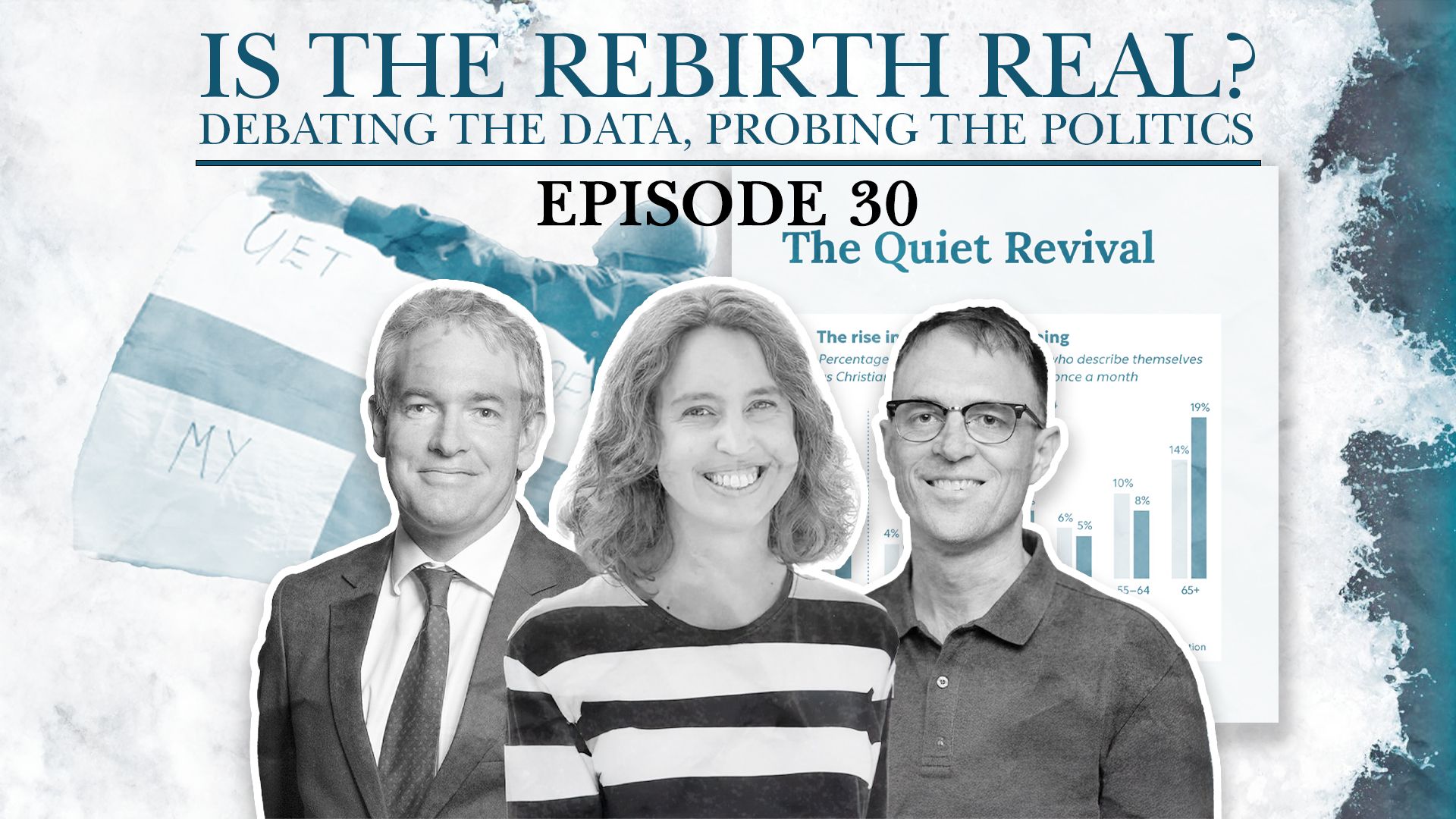
The picture was evidently complicated. In my public speaking I chose to caveat any references to the Quiet Revival, with an acknowledgement that the figures were being contested. I also interviewed the most prominent critic of the report, sociologist David Voas, for an edition of my podcast that interrogated the data. You can hear that on Season 2 of The Surprising Rebirth of Belief In God podcast, Episode 30 - Is the Rebirth Real? Debating The Data, Probing the Politics.
Despite the mounting criticism, Bible Society continued to stand by its report. YouGov was a reputable polling company, used and trusted by hundreds of organisations, including secular organisations like Humanists UK. Bible Society had sought and been given repeated reassurances of the quality of the data.
Then came last week’s bombshell.
Bible Society announced they were withdrawing the Quiet Revival report, having recently discovered that YouGov “failed to activate key quality control technologies that protect the sample from a wide range of errors and this undermines the reliability of the results.” It appears that the survey had been contaminated by bogus respondents.
Arguably, the organisation wiping the most egg from their face in all of this is YouGov who ran the survey. CEO Stephan Shakespeare has apologised personally, stating they take full responsibility for the flawed data and outputs and saying, “We would like to stress that Bible Society has at all times accurately and responsibly reported the data we supplied to them.”
Nevertheless, this moment is an important wake up call. A reminder that we should all be very wary of putting our faith in any survey or poll, especially when they align with our deepest desires. Confirmation bias - our propensity to ‘count the wins’ and ‘ignore the misses’ runs deep in human nature. As a Christian I’ve been guilty of it, as are people on the other side of the aisle.
In fairness, since the error emerged, Bible Society have owned up quickly to what went wrong, and will no doubt think carefully about how they publicise any future research. For the moment, a dose of humility and introspection is in order, and perhaps an opportunity to build some bridges with critics whose concerns turned out to be fully justified.
However, the danger with a U-turn of this magnitude is that it can also lead to errors in the opposite direction. Humanists UK, freshly vindicated by the reversal, state on their website: “We need to be absolutely clear: there is no revival of Christianity in Britain.”
That statement is true. However, it doesn’t do justice to the actual picture of what’s happening both here and in Europe. Perhaps ‘Revival’ isn’t the word we should ever have used for what’s happening… but the word ‘rebirth’ still feels appropriate.
The same day that the Bible Society’s report was retracted, Le Figaro, one of France’s leading newspapers, published a full page article on the continuing growth of demand for adult baptism. For the past two years the famously secular country has seen the largest number of adult converts to Catholicism in living memory. This year’s Easter vigil is expected to set a fresh record as over 20,000 people enter the church.
But France is not an outlier. Spain is reporting a similar trend. Something unexpected is also happening in Scandinavian countries. Sweden has seen a notable rise in confirmations offsetting church decline, while Norway, Finland and Denmark are all reporting an uptick of interest, especially among young men.
Likewise, many Orthodox parishes around Europe are dealing with a boom in young catechumens, while a survey by Fusion, a UK Christian campus ministry, found that over 75% of non-Christian students would accept an invitation to church if asked.
In the UK, the Catholic diocese of Westminster is about to see its largest intake of new converts for 15 years and other parts of the country are recording similarly spikes of people being prepared for baptism or confirmation. The Baptist church in the UK is reporting significantly higher numbers of baptisms and youth attendance, while registration on Alpha courses, an introduction to the Christian faith run by many churches across the UK, has also risen sharply in the past few years.
Commercial metrics tell the same story. Christian music streaming on Spotify has surged in recent years and, against an otherwise stagnant book market, UK Bible sales are at an historic high, rising from £2.69million to over £6.3million between 2019-2025.
Now let me be clear. None of these figures or trends amount to a ‘revival’. But they are reliable data points and they indicate that something is happening.
How that plays out in future church attendance statistics remains to be seen. At this point, my best guess is that any new converts are not yet fully offsetting the number of older religious people who are dying or have fallen away for church going. That means the church may still be shrinking, but that the decline itself may be slowing.
This is underscored by figures from the Church of England. The Covid lockdowns of 2020-21 decimated churchgoing. Since then, there have been 3 years of overall growth, but attendance hasn’t yet reached pre-Covid figures.
However, this is about more than just numerical figures.
A ‘vibe shift’ is a difficult thing to quantify, but there’s been an undoubted change in the way people are talking about faith in public in the past few years. It’s perhaps best captured by the list of influential converts that have been popping up in recent years.
To mention just a handful: In 2024 the historian Niall Ferguson was baptised and confirmed, along with his wife Ayaan Hirsi Ali, a former New Atheist activist. Historian and podcast host Tom Holland is now a regular churchgoer, and his best-selling book ‘Dominion’ has been reminding a secular culture about its Christian roots. Journalist and female rights activist Louise Perry now describes herself as a Christian. Sociologist Charles Murray recently announced his conversion. Joe Rogan says he’s going to church. Even Prince William, after years of speculation about whether the future head of the Church England actually believes, has confirmed a ‘quiet faith’.
It won’t escape notice that many of the afore-mentioned personalities lean conservative (or at least anti-woke) in their outlook. There’s no doubt that some of the new interest in traditional faith is a backlash to the overreach of progressive ideologies in our culture. Likewise, it’s no secret that the religious vibe shift is overlapping with a wider political vibe shift. The result is sometimes dubbed Christian Nationalism.
At the softer end it manifests in voices such as Danny Kruger, whose Parliamentary speech on the dangers of losing the Christian culture of the UK went viral last summer. At the sharp end it results in Christian slogans and symbols bedecking flags at anti-immigration rallies. Tommy Robinson is also one of the new converts to Christianity.
However, whenever Christianity gets into bed with politics (of the left or right) it’s a breeding ground for disaster. In my opinion, being co-opted by cynical political actors would be a far greater catastrophe for the church than a flawed report based on faulty data.
Nevertheless, we shouldn’t be surprised when tumultuous times create a messy picture. Religious renewals of the past have always been bred of cultural disruptions and mixed motives. Whether or not we approve of St-George-cross-flag-waving-crowds (who are arguably responding to a lot of other people waving other flags in recent years), the common thread is that people are searching for identity.
The default secular humanism on offer in our culture has manifestly failed to deliver on its promises. We are being atomised by technologies that are programmed to polarise us. AI is proving to be a dangerous substitute for real human relationships, while the endless variety of identities and ideologies promoted by social media has created a generation of disillusioned, distracted and depressed young people. And it’s leading many of them to look for a better story.
That’s why, as I’ve met with vicars, church ministers and youth leaders over the past three years, I’ve kept hearing the same thing: “We are encountering an unprecedented spiritual hunger among the the new seekers turning up at our doors”. In the process I’ve also met an unusual number of once-committed atheists who have come to faith in unusual circumstances.
Let me be clear - these stories are all anecdotal, they don’t come attached to any dataset. And if a Christian revival ever truly gets underway, we won’t need a spreadsheet to tell us - it’ll be obvious. So lets be careful with the word ‘revival’, regardless of whether we attach it to a qualifier such as ‘quiet’. Humble pie needs to be consumed and lessons need to be learned. But its not the end of the story.
The withdrawal of the Quiet Revival report this past week has felt like bad news for many - but remember, so did Good Friday, until the morning of Easter Sunday came along. With that in mind, let’s not make the mistake of thinking that nothing whatsoever is happening.
If you turn up at your local church this Easter (or any Sunday this coming year) you might just be surprised at the number of ‘rebirth’ stories you encounter among those who have chosen to take a second look at Christianity.
Thanks for reading… and Happy Easter!
Justin Brierley
Watch my video essay responding to the Quiet Revival withdrawal. Look out for more coverage of this issue when The Surprising Rebirth Of Belief In God podcast returns for a 3rd season later this year.
This week I took part in a panel discussion on the withdrawal of the Quiet Revival research, featuring Paul Williams of Bible Society and critics of the research including David Voas and Tim Wyatt.
“I have been listening to Justin for years. His podcasts feed my soul, and I enjoy the moderated and respectful dialogues that ensue in an age of polarization. Justin has a knack for fostering challenging, reasonable, informative material with an invitational kindness. The newly inaugurated "Uncommon Ground" is a delight, and I highly recommend it. Atheists, Agnostics, and Theists alike will have opportunity to hear alternative points of view expounded by experts in their respective fields.”
Park Smith
Become a regular Patreon Supporter.
Silver supporters get early access to new episodes and bonus content. Gold supporters also receive signed copies of my books and monthly catch ups with me.
A great way to make a one-off gift - thank you!
Tax-deductible giving from the USA
If you’d like to give in this way, we are partnering with Defenders Media to make this possible. Just follow the link.